Your Tap Water Tastes Like Chlorine or Leaves Grit
Reverse Osmosis in New Braunfels and surrounding areas for households seeking cleaner drinking water and improved taste
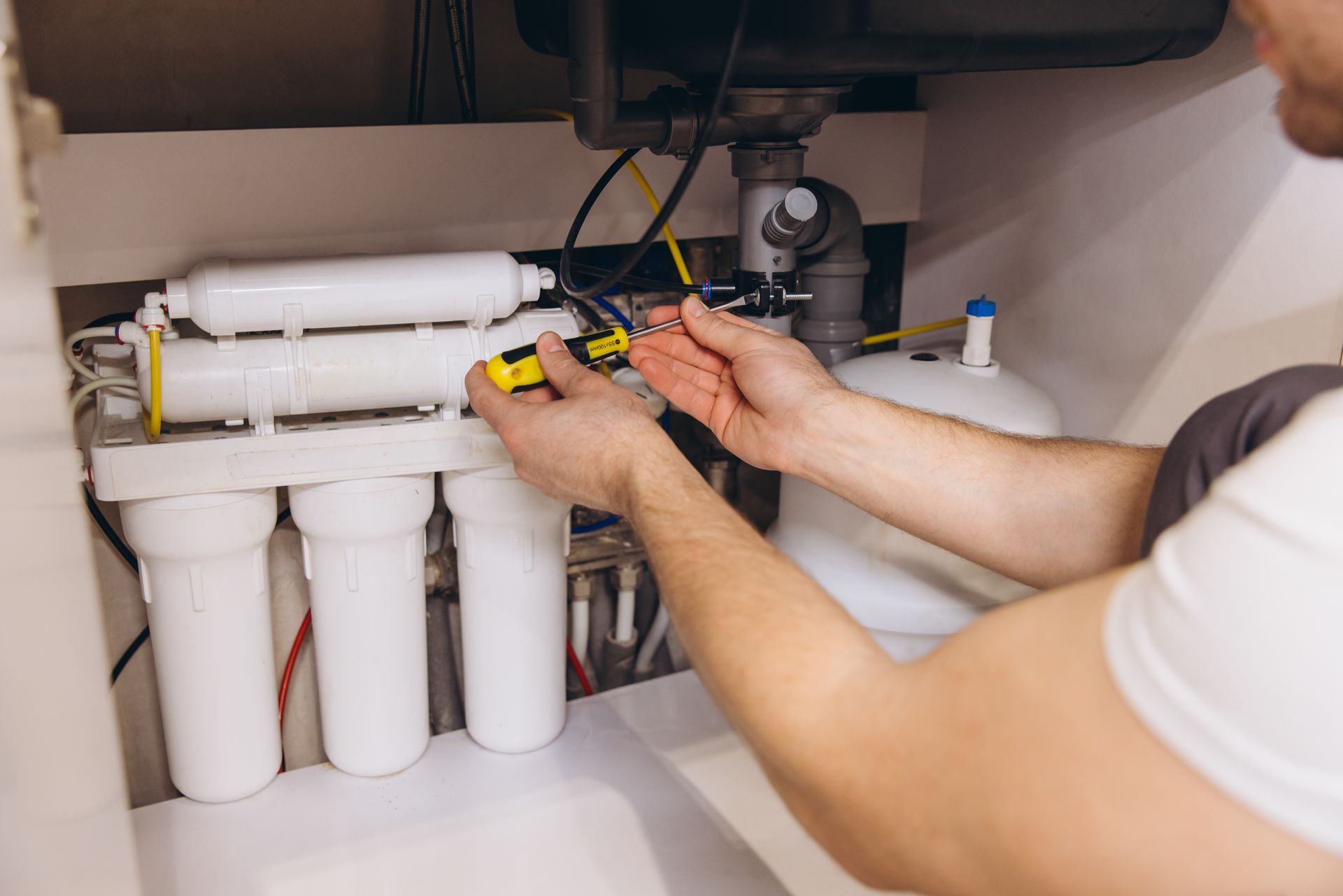
Night & Day Plumbing installs under-sink reverse osmosis systems for homeowners in New Braunfels, Schertz, Boerne and surrounding areas who want to remove sediment, chlorine, and dissolved solids from their drinking water. If you notice an unpleasant taste or odor in your tap water, see particles settle in a glass after it sits, or prefer not to rely on bottled water for cooking and drinking, a reverse osmosis system provides point-of-use filtration that delivers purified water directly to a dedicated faucet mounted at your kitchen sink. The installation involves connecting the system to the cold water supply line and routing the filtered water to a separate tap, so your main faucet remains available for tasks that do not require purified water.
Reverse osmosis uses a semipermeable membrane to separate water molecules from contaminants, forcing water through the membrane under pressure while flushing rejected particles down the drain. The process reduces chlorine taste, removes sediment, and lowers the concentration of dissolved minerals that contribute to water hardness and aftertaste. In local water supplies, chlorine is used for disinfection, and while it is safe to drink, many people find the taste objectionable. The system addresses that concern along with sediment and mineral content that vary depending on whether your water comes from a municipal source or a private well.
If you want better-tasting water for coffee, cooking, and drinking without the cost and waste of bottled water, contact the team to schedule installation and discuss system capacity options.
What Reverse Osmosis Installation Provides
You will have access to filtered water at a dedicated faucet, and the difference in taste is immediately noticeable when you fill a glass or brew coffee. Water from the reverse osmosis tap lacks the chlorine odor and mineral aftertaste present in untreated tap water, and you will not see sediment settle at the bottom of a pitcher or pot. The filtration process removes particles down to a fraction of a micron, so the water is clearer and tastes cleaner than what comes from the main faucet.
The system includes a storage tank mounted under the sink, which holds several gallons of filtered water ready for use, so you do not wait for the membrane to process water each time you turn on the tap. Night & Day Plumbing LLC installs the system with connections that prevent leaks and ensure the drain line is properly routed to handle wastewater from the filtration process. The membrane and pre-filters require periodic replacement, typically every six months to two years depending on water quality and usage, though that maintenance is straightforward and does not require a service visit.
The installation does not include replacement of existing faucets or modifications to cabinetry beyond drilling a hole for the dedicated tap. If your under-sink area is crowded with a garbage disposal and other fixtures, the team will assess available space and may recommend a compact system or alternative mounting location. The reverse osmosis system produces wastewater as part of the filtration process, typically two to three gallons of drain water for every gallon of purified water, which is a normal byproduct of the membrane's operation.
How Does Reverse Osmosis Compare to Other Filtration Methods
Reverse osmosis provides a higher level of filtration than pitcher filters or faucet-mounted units, removing contaminants that simpler carbon filters cannot address. The following questions address common concerns about reverse osmosis systems and their operation.
What contaminants does reverse osmosis remove?
The system reduces chlorine, sediment, dissolved minerals, nitrates, and many other impurities, though it is not designed to remove all biological contaminants unless paired with additional sterilization.
How long does it take to fill a glass from the reverse osmosis faucet?
Because the storage tank holds pre-filtered water, you can fill a glass in seconds, though refilling the tank after heavy use takes one to two hours depending on membrane capacity.
Why does the system produce wastewater, and where does it go?
The membrane rejects contaminants by flushing them down the drain, which prevents buildup on the membrane surface and maintains filtration efficiency over time.
When do you need to replace the filters and membrane?
Pre-filters typically last six months, the membrane lasts two to three years, and the post-filter lasts about a year, with exact timing depending on water quality and daily usage in your New Braunfels home.
What happens if water pressure is too low for the system?
Reverse osmosis requires at least forty pounds per square inch of water pressure to function properly, and if your home's pressure is lower, a booster pump can be added during installation.
Night & Day Plumbing LLC handles reverse osmosis installations with attention to proper sizing, leak-free connections, and system testing to ensure the water quality meets your expectations. Whether you are concerned about taste, sediment, or the cost of bottled water, the team can assess your under-sink space and recommend a system that fits your household's drinking water needs. Reach out to schedule an installation and start enjoying cleaner, better-tasting water directly from your kitchen tap.